Place a cat scratching post close to a spot your cat already scratches. If you are trying to protect the arm of a sofa, start beside that arm rather than across the room. Leave a clear path so the cat can approach and stretch.
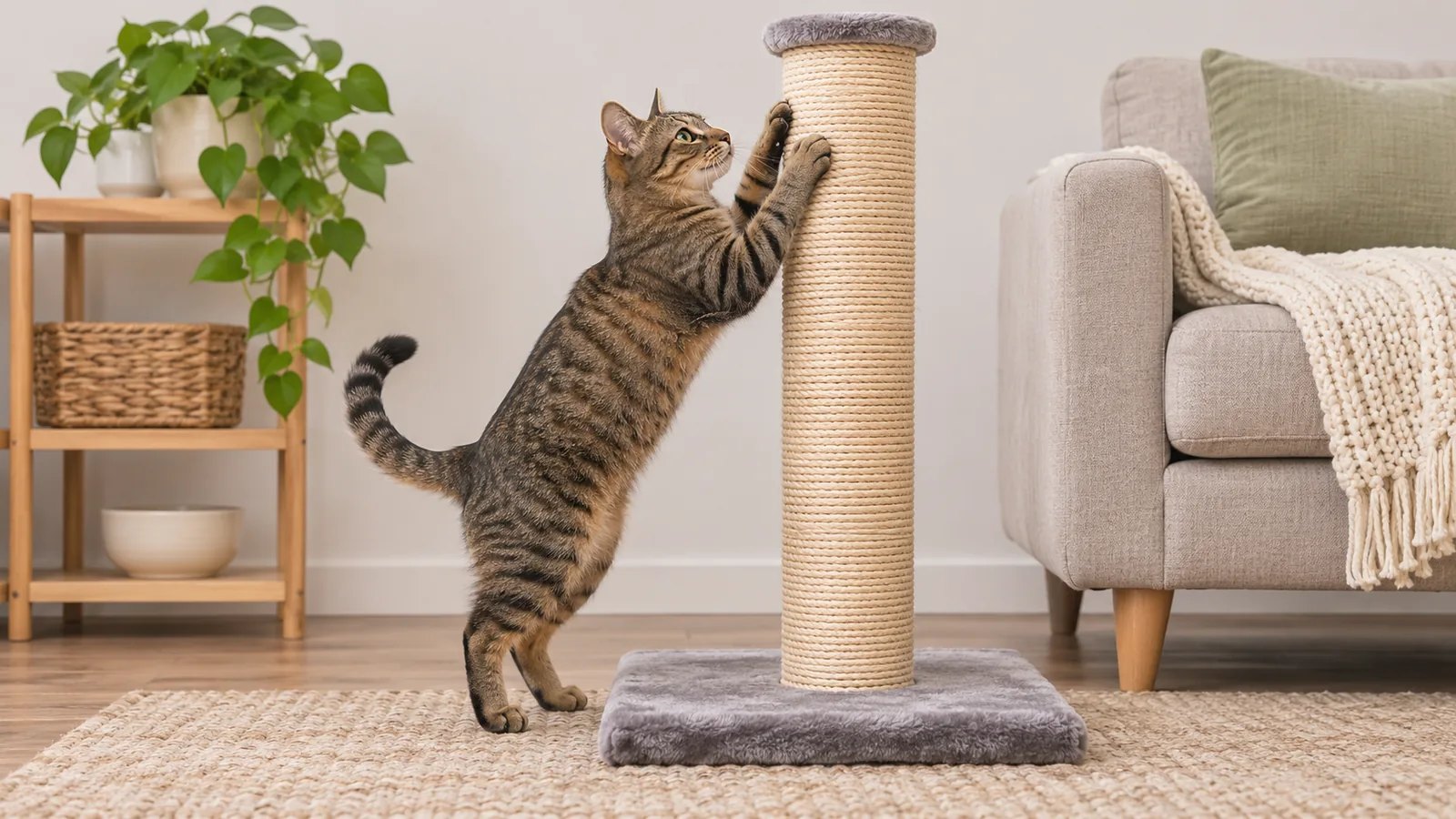
Table of Contents
Check the approach from your cat’s point of view
Allow room around the base for the cat to position their back paws. Move nearby baskets or cords that interfere. Check the base is stable where it stands.
Notice when your cat uses it
Some cats scratch after getting up or when entering a room. Track a few common times and locations. If the first spot is consistently ignored, try a route between a resting and play area.
Move it gradually if needed
Once your cat uses the post, move it a short distance and observe. Keep the surface type and height the same while testing placement. If the post is used in only one location, the convenient spot may matter more than the room layout.
3 places to try a cat scratching post
Beside the furniture your cat already uses. If your cat approaches the sofa from the open side, put the post on that same side. Line the scratchable surface up with the edge your cat targets and leave a clear approach. Keep the post close enough to discover during the same trip across the room.
Near a regular resting spot. Watch where your cat steps after getting out of a bed or off a perch. Put the post a short distance along that route. Leave enough room to turn and stretch without brushing against a chair, wall, or laundry basket.
On an established route through the house. In a small home, a post can sit at the side of a doorway or along the edge of a living area. Open nearby doors and drawers before settling on a location. Keep both the walkway and the area immediately in front of the post clear.
The ASPCA’s guide to scratching behavior also suggests offering a post next to furnishings a cat already scratches. Give your cat time to investigate the post on their own.
Test placement before buying a second post
Pick the spot you see your cat pass most often. Put the post down, then check whether the base rocks or slides on the surface. If it is designed to sit against a wall, follow the manufacturer’s instructions and make sure your cat can still reach the scratchable side.
Observe ordinary use over several days. Keep a short note of where scratching happened and whether the cat approached, sniffed, or used the post. If the cat comes close but never scratches, check the angle and surface before assuming the location needs to change.
Change one thing at a time. Try moving the same post a little closer to the furniture, turning the scratchable side toward the usual approach, or clearing an obstacle. If your cat scratches rugs or mats, see the vertical and horizontal scratcher comparison before deciding whether to test a flat option.
Check clearance in small or shared rooms
In a narrow room, stand where the cat normally approaches and look for obstacles at floor level. Watch for trailing cords, the swing of a door, or a crowded route to another room. If you have more than one cat, observe whether they can use the area without blocking each other’s way out.
Place the cat scratching post on a firm, level spot and recheck the base after moving it. If you are choosing a new model, compare the floor space with the actual base measurements and check whether your pet has room to stretch alongside it. See our cat scratching post height guide for help comparing dimensions.
Related reading: Vertical and horizontal scratcher comparison. Browse all topics in Buying Guides.